In textiles, advanced materials and biomedical applications, fiber cross-sectional shape and key parameters such as perimeter, area and aspect ratio are essential for assessing quality, optimizing production and advancing research. Traditional cross-sectional analysis has long faced large manual-preparation errors, insufficient scan clarity, slow parameter calculation and poor data repeatability. It consumes considerable labor and time, while manual deviations can distort results and affect quality control and R&D decisions.
The Smart Fiber Cross-Section Reporting System was developed to address these challenges. Combining three core technologies — scientific specimen preparation + high-definition intelligent scanning + AI deep analysis — it creates a fully intelligent solution from sample processing to data reporting. It shifts cross-sectional analysis from reliance on experience to data-driven work, providing businesses and research institutions with precise, efficient and reliable support.
Core Technological Breakthroughs: Four Dimensions Reshaping Fiber Analysis
1. Standardized Scientific Preparation: The First Foundation for Precise Analysis
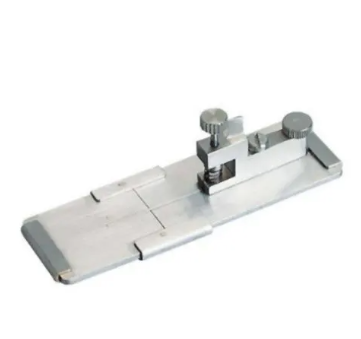
Specimen preparation is the prerequisite for cross-sectional analysis, and its quality directly determines the accuracy of subsequent scanning and analysis. Conventional manual preparation depends on operator experience and faces long preparation cycles and high preparation costs..
The system uses an innovative standardized scientific preparation process, with customized tools and strict operating procedures, achieving three breakthroughs:
· Precisely controlled section thickness: precision mechanical devices limit section-thickness error to the micrometer level, ensuring complete presentation of every fiber cross section;
· Oriented fiber arrangement: specialized sample-fixation technology prevents misalignment and overlap during preparation, ensuring one cross section per fiber during scanning;
· Reduced external interference:Scientific preparation reduces interference from debris and vacuoles, helping maintain data accuracy..
Whether working with natural fibers (cotton, wool and silk) or chemical fibers (polyester, nylon and carbon fiber), the system accommodates different preparation requirements, ensuring every sample meets high-definition scanning and precise-analysis standards.
2. High-Definition Intelligent Scanning: Capturing Every Cross-Sectional Detail
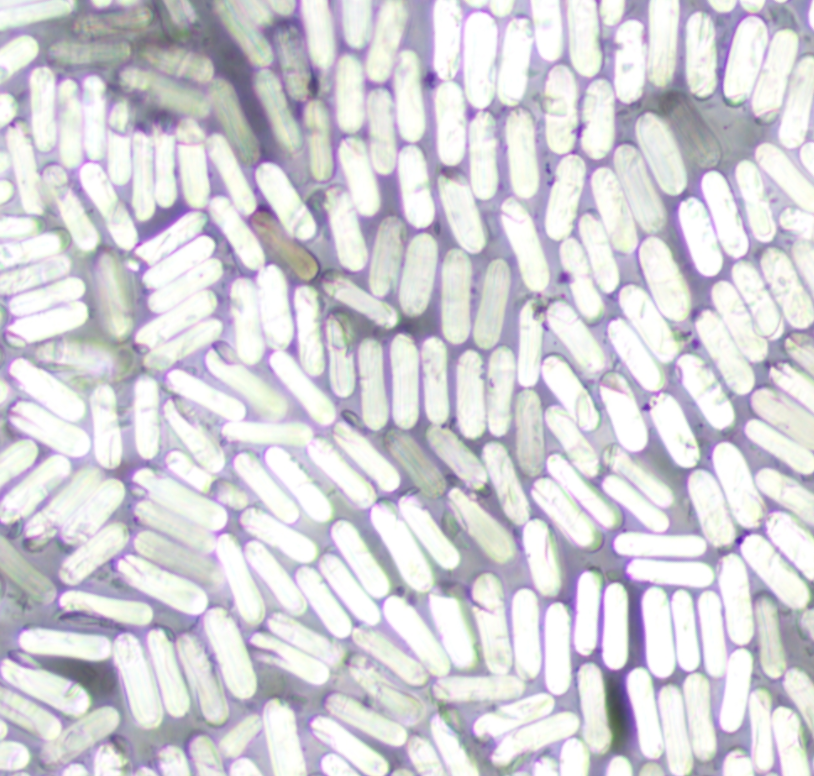
Conventional scanners often lack resolution or have unstable illumination, producing blurred contours and lost details. Small recesses in fine-denier fibers and special structures in shaped fibers, such as hollow, triangular or multilobal sections, may not be clearly visible, directly affecting parameter-calculation accuracy.
The system incorporates an industrial-grade high-definition intelligent scanning module with optimization in both hardware and algorithms:
· Ultrahigh-resolution imaging: megapixel industrial cameras and customized optical lenses provide micrometer-level resolution, revealing contour lines and tiny textures even in ultrafine fibers only a few micrometers in diameter;
· Intelligent illumination adjustment: a built-in multispectral lighting system automatically adjusts intensity and spectral range for transparent, translucent or opaque fibers, avoiding reflections and shadows to optimize image contrast;
· Fully automatic scan-path planning: without manually moving the sample stage, the system plans scan areas from sample dimensions for one-click full-coverage scanning. It also supports secondary fine scans of selected regions, balancing efficiency and accuracy.
3. AI Deep Analysis: Precisely Identifying Every Fiber
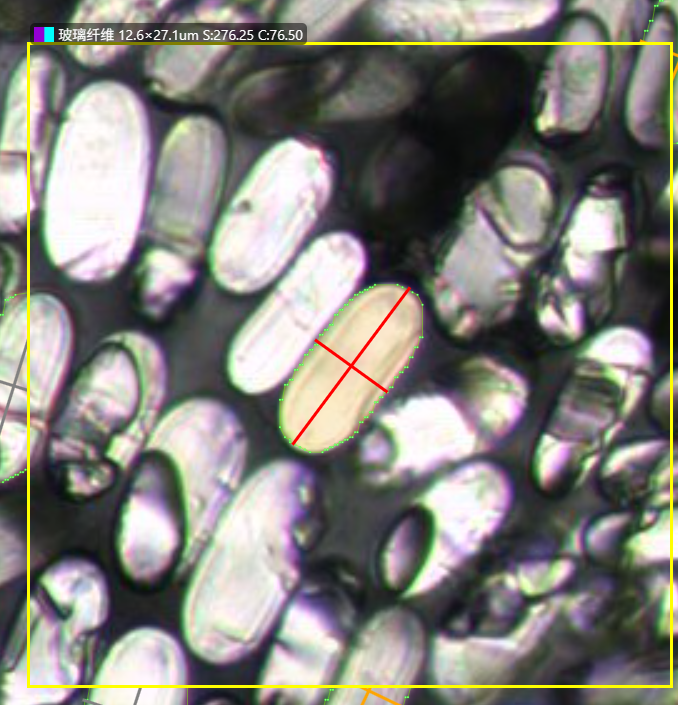
Finding every fiber and calculating every parameter accurately is the core goal of cross-sectional analysis and the most time-consuming, error-prone part of manual work. Manual counting requires identifying individual fibers, tracing contours in software and calculating perimeter and area. One sample often takes several hours, with differences between operators reaching 5%-10%.
The system uses deep-learning AI to create a fully automated fiber identification - contour localization - parameter calculation workflow, delivering three core capabilities:
· Precise localization without omissions or misidentification: trained on tens of thousands of fiber samples of different materials and shapes, AI automatically identifies target fibers. Even with small amounts of impurities or slight overlap, contour features and grayscale differences enable precise differentiation, with recognition accuracy above 99%;
· Automatic counting eliminates tedious manual work: without manual intervention, the system completes full-image fiber counting within 1 minute after scanning and marks the coordinates of every fiber for later review;
· Simultaneous multiparameter calculation: AI automatically traces each cross-sectional contour and calculates perimeter, area, equivalent diameter, aspect ratio, circularity and other key parameters, with calculation error below 1%, substantially better than manual calculation.
4. Intelligent Report Generation: Making Data Clear and Usable
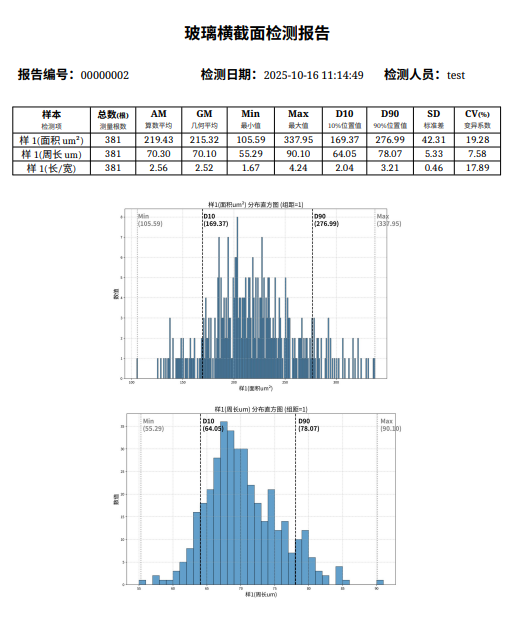
Analytical data ultimately need clear, standardized reports. Conventional reports require manually organizing data and drawing charts, reducing efficiency and potentially hindering sharing and traceability through inconsistent formats.
The system generates reports fully automatically. Users can select standard templates or customize formats, covering:
· Basic sample information: preparation parameters, scan parameters and analysis time for traceability;
· Visual charts: fiber cross-section distribution maps, parameter histograms and trend charts that present results intuitively;
· Detailed data tables: original data for every fiber, including identifier, coordinates, perimeter, area and aspect ratio, exportable to Excel, PDF and other formats for data mining and paper writing;
Diverse Applications: Supporting Precision Across Industries
With high adaptability, accuracy and efficiency, the Smart Fiber Cross-Section Reporting System is widely used across several fields, helping businesses improve quality and reduce costs and research institutions achieve innovation:
· Textiles: raw-material inspection, such as evaluating cotton maturity or shaped synthetic-fiber conformity; spinning-process optimization by adjusting tension from cross-sectional parameters; and finished-product control, such as analyzing fiber-distribution uniformity in fabrics;
· Advanced materials: examining cross-sectional integrity in high-performance fibers such as carbon and glass fibers, including holes or cracks, to support composite-strength design;
· Biomedical applications: analyzing the cross-sectional dimensions and shapes of medical fibers, such as sutures and tissue-engineering scaffold fibers, to ensure biocompatibility and safety;
· Research institutions: supporting fiber modification and new-fiber development, verifying R&D proposals through precise cross-sectional analysis and accelerating commercialization.
Choose Us: More Than a System — Assurance of Precision
Compared with conventional methods and similar products, the core value of the Smart Fiber Cross-Section Reporting System is a complete solution from sample to decision:
· Lower cost and greater efficiency: reducing single-sample analysis time from several hours or even several days to a few minutes, cutting labor costs by more than 80% and avoiding repeat analysis caused by manual error;
· Reliable data: standardized preparation, high-definition scanning and AI analysis ensure repeatability and accuracy, meeting fiber-analysis requirements in international standards such as ISO and AATCC;
· Easy operation: a fully visual workflow requires no specialized AI knowledge or complex training, allowing ordinary operators to learn quickly;
· Continuous improvement: the team regularly updates algorithms and features according to industry requirements and technological developments, keeping the system ahead of industry standards.
Innovation in materials is increasingly focused on precise microscopic control. The Smart Fiber Cross-Section Reporting System overcomes conventional analysis bottlenecks through innovation, turning each fiber's microscopic data into a driving force for quality improvement and R&D.
If you face inefficient fiber analysis or inaccurate data, or want precise data to support development and quality control, contact us for a free trial. Together, we can explore new possibilities for intelligent analysis in your business!