Understanding Glass Fiber Diameter Classes: Decoding Industrial Materials at Micrometer Precision
An “invisible backbone of industry”—glass fiber—appears in lightweight aerospace components, battery separators for new-energy vehicles, and even the circuit boards in our everyday smartphones. For this ultrafine material, whose diameter is measured in micrometers (μm), small differences in transverse size directly determine the performance limits of the final product. This article explores the microscopic world of glass fiber through diameter classification, application characteristics, and advanced inspection technology.
I. Micrometer Precision Defines a Fiber's Identity
Glass fiber diameter is a core parameter for evaluating its performance and must be measured with precision instruments such as optical or electron microscopes. International standards and industry practice reveal a clear relationship between diameter, performance, and application, dividing fibers into five main classes:
1. Microfiber: 1–3 μm—A Flexible Pioneer at the Micrometer Scale
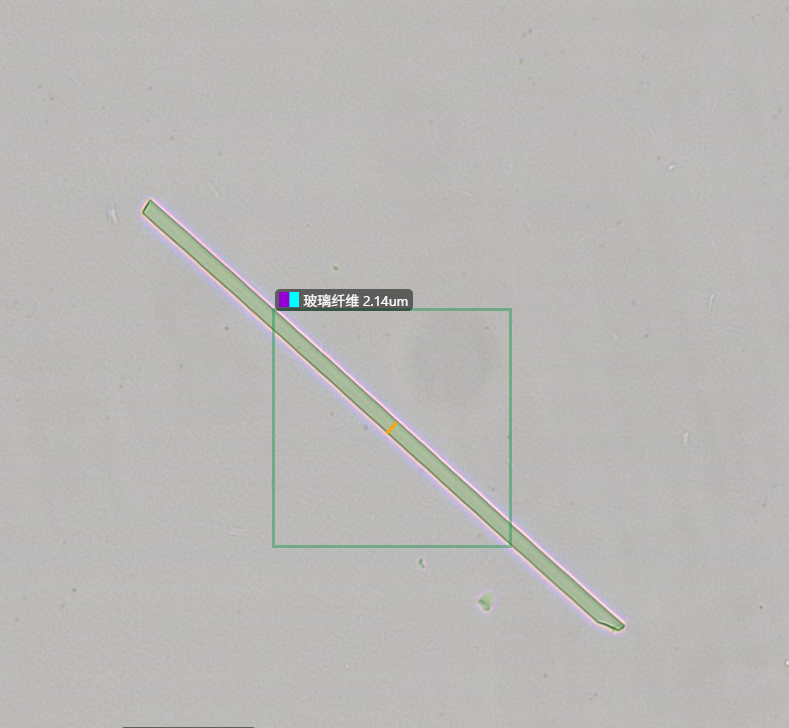
Microfiber
· Characteristics: Extremely flexible, with a very high specific surface area. A single fiber is 30-50 times finer than a human hair, yet these fibers can be woven into micrometer-scale filtration networks.
· Applications: In HEPA filters, 1-3 μm fibers capture particles above 0.3 μm with a filtration efficiency of 99.97%. Used as reinforcement layers in aerospace composites, they help reduce aircraft weight by 15%-20% while improving fatigue resistance. As carriers for nanocoatings, their exceptionally large specific surface area adsorbs more functional coating material, enabling special properties such as electrical conductivity and thermal insulation.
2. Fine Fiber: 3–9 μm—An Industrial All-Rounder
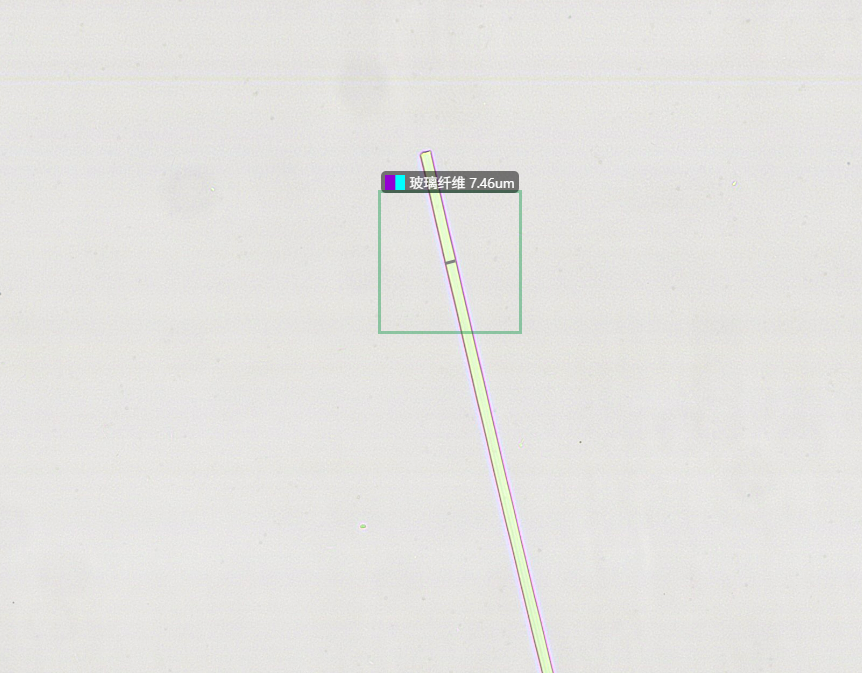
Fine Fiber
· Characteristics: Strikes an optimal balance between strength and processability, ensuring fiber-bundle tensile strength while facilitating textile processing, winding, and other manufacturing operations.
· Applications: In electronic substrates (PCBs), 3-9 μm fibers are a core material for insulation layers and ensure stable circuit signal transmission. In lightweight automotive components, they reinforce carbon fiber composite panels, helping reduce body weight by more than 10% while improving crash safety. As surface reinforcement for wind turbine blades, they withstand wind speeds above 60 meters per second and extend blade life by 5-8 years.
3. Standard Fiber: 9–15 μm—An Economical Choice for Glass Fiber Reinforced Plastics
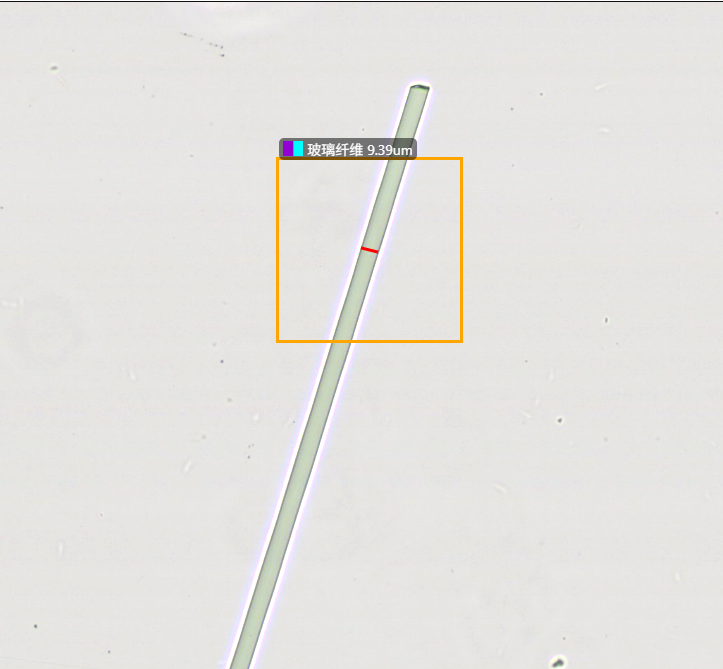
Standard Fiber
· Characteristics: Stable mechanical properties and low production costs make it the most cost-effective reinforcement material, accounting for more than 60% of global glass fiber production.
· Applications: Widely used in corrosion-resistant equipment such as pipes and storage tanks; in the chemical industry, it withstands sulfuric acid at a concentration of 98%. In building reinforcement mesh, fibers around 12 μm combined with concrete improve wall crack resistance by 30%. It is also a core component of SMC (sheet molding compound) in consumer applications such as bathroom fixtures and furniture.
4. Coarse Fiber: 15–24 μm—A Low-Cost, Rigid Structural Backbone
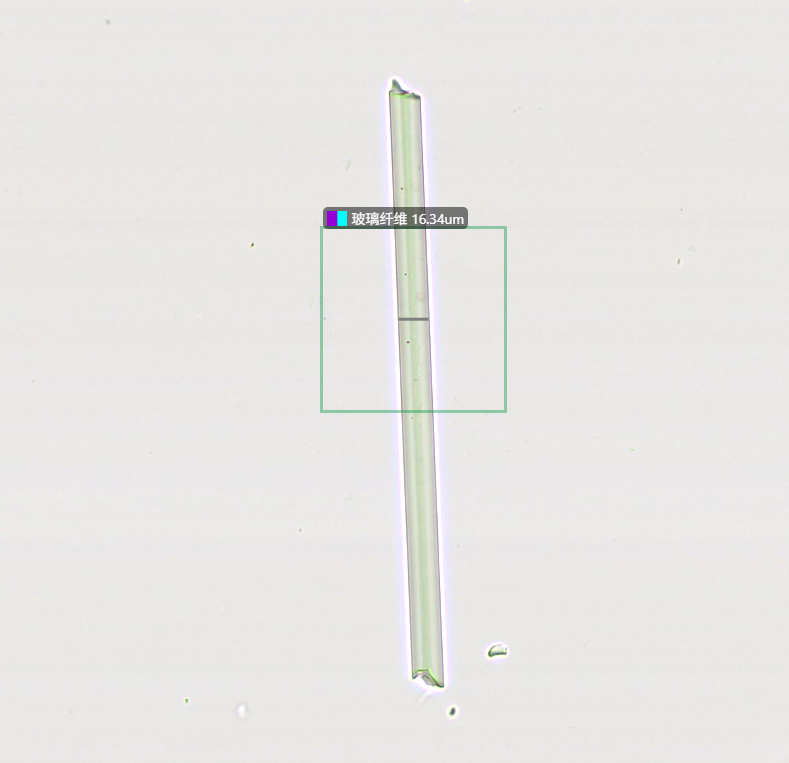
Coarse Fiber
· Characteristics: Its diameter approaches that of human hair (approximately 50-100 μm). High rigidity and easy dispersion after chopping make it suitable for applications with moderate strength requirements.
· Applications: In shipbuilding, it reinforces the cores of sandwich structures, reducing hull weight while improving impact resistance. Mixed with concrete for industrial flooring, it reduces cracking and suits heavy-machinery factories. In chopped-strand mats, coarse fibers' high rigidity enables rapid forming and improves production efficiency.
5. Specialty Fibers: Customized Diameters Extend Performance Boundaries
· Diameter Range: Covers nanofibers <1 μm and industrial coarse fibers >24 μm, designed entirely according to end-use requirements.
· Advanced Applications:
· Nanofibers (0.5–1 μm): In lithium battery separators, fibers with a diameter of 0.8 μm form nanoscale pores that prevent lithium dendrite penetration and improve battery safety. In air purification, electrostatic electret treatment enables adsorption of ultrafine particles such as PM2.5.
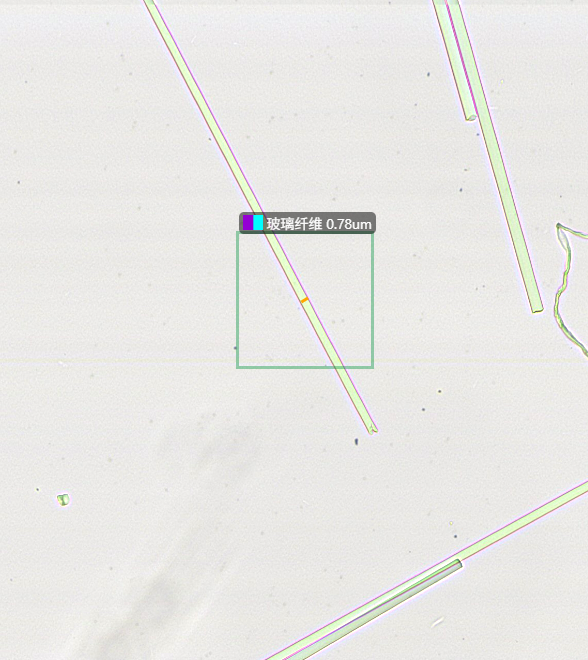
Nanofibers
· Extra-Coarse Fibers (>30 μm): In ballistic protection, 30-50 μm fibers arranged in multiple cross-laid layers resist close-range shots from 9 mm pistols. In high-temperature insulation, coarse fibers' porous structure effectively blocks heat transfer and is used in aerospace engine insulation layers.
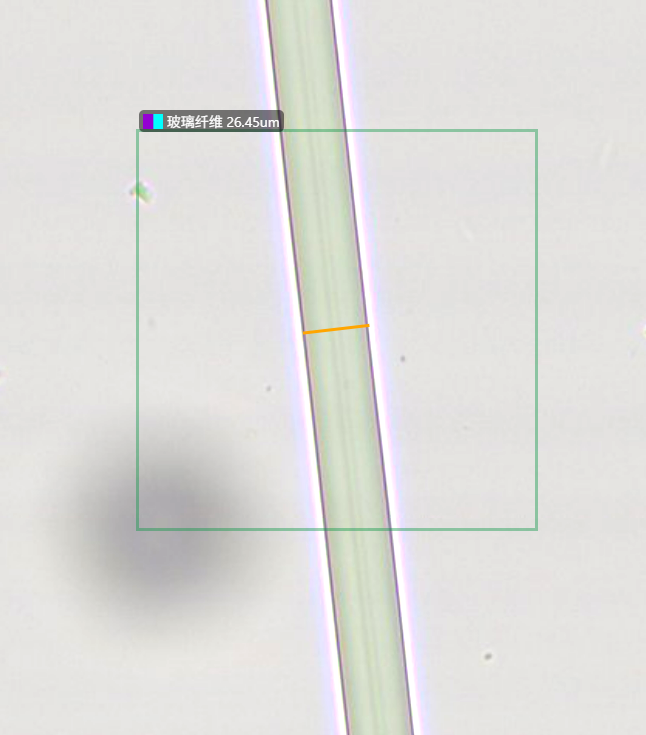
Coarse Fibers
II. Tanvint's Intelligent Inspection System: Redefining Fiber Diameter Measurement
In glass fiber research and production, diameter inspection is the first quality-control checkpoint. Traditional manual measurement suffers from low efficiency (more than 30 minutes per sample), large errors (±1 μm), and a high missed-inspection rate, making it increasingly inadequate for precision requirements in high-end applications.
The Glass Fiber Diameter Reporting System developed by Tanvint Intelligent overcomes industry bottlenecks through three core advantages:
1. Exceptional Precision and Efficiency:
· Machine vision and AI algorithms scan the entire slide, automatically identify fibers, and remove impurities, bubbles, and other interference. Software calculation precision is 0.01 μm (this is not the complete instrument's measurement error), and more than 200 samples can be processed each day, improving efficiency by 50 times compared with manual inspection.
2. End-to-End Automation:
· From sample preparation to generation of inspection reports—including diameter distribution histograms, mean diameter, and CV values—no manual intervention is required, avoiding subjective errors. Data can connect directly to MES systems to support quality control in intelligent factories.
3. Adaptation to Multiple Applications:
· Supports samples in forms including individual filaments, fiber bundles, chopped-strand mats, and fabrics. It covers the full inspection range from aerospace-grade ultrafine fibers (1 μm) to industrial coarse fibers (50 μm), has passed CNAS accreditation, and provides result traceability for 10 years.
III. When Micrometer Precision Meets Industry's Future
Glass fiber diameter classification is fundamentally a precise balance between performance and cost in materials science. Ultrafine fibers extend high-end application boundaries; standard fibers underpin industry; and specialty fibers provide customized solutions for advanced fields such as new energy and national defense. Tanvint's intelligent inspection system not only addresses inaccurate and slow measurement, but also helps enterprises move from experience-based production to precise research and development through data-driven methods.
Whether pursuing an aircraft engine weight reduction of 1 gram or competing to increase lithium battery energy density by 1Wh/kg, micrometer-scale fiber diameter is becoming an invisible key to industrial upgrading.
Contact Tanvint Intelligent Today to obtain a customized inspection solution and make every fiber's diameter data a strong foundation for product competitiveness.